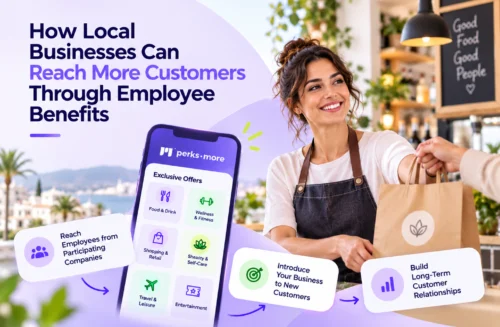




A practical guide to creating employee benefits that people understand, value and actually use
Employee benefits are often presented as a long list of perks available to a company’s workforce. But having more benefits does not necessarily mean employees receive more value.
A gym membership that employees never use, a discount at a business nobody visits, or an offer with complicated redemption rules may look good in an HR document but have little practical impact.
A useful employee benefit is different.
It should solve a real need, be easy to understand, fit into everyday life and give employees a clear reason to use it.
For employers, this means the question is not simply:
“What benefits can we offer?”
A better question is:
“Which benefits will actually be useful to our employees?”
What Is a Useful Employee Benefit?
A useful employee benefit is one that an employee can recognise, understand, access and use.
The value does not necessarily come from how expensive the benefit is.
A simple discount at a restaurant an employee visits every week could be more valuable to that person than a benefit they technically receive but never use.
A practical employee benefit usually has five characteristics:
- Relevant to employees
- Easy to understand
- Easy to access
- Simple to redeem
- Valuable enough to encourage usage
These principles apply whether the benefit is a workplace service, wellness programme, employee discount or lifestyle perk.
1. Relevance Comes First
The most important question for any employee benefit is:
“Is this relevant to the people who will receive it?”
Employees have different lifestyles, responsibilities and interests.
One employee may be interested in fitness.
Another may care more about restaurants.
Someone else may value shopping discounts, travel offers or wellness services.
This is why offering a variety of categories can be more useful than giving everyone exactly the same perk.
For example, an employee benefits platform could provide access to:
- Food & Drink
- Wellness & Fitness
- Shopping & Retail
- Travel & Leisure
- Beauty
- Technology
- Entertainment
Employees can then choose the benefits that fit their own lives.
The takeaway
A benefit becomes more useful when employees can see themselves using it.
2. Employees Should Understand the Benefit Quickly
Even a valuable benefit can lose its appeal if employees cannot figure out what it actually provides.
An employee should be able to answer basic questions quickly:
- What is the benefit?
- What do I receive?
- Who can use it?
- Where can I use it?
- When can I use it?
- How do I redeem it?
- Are there any restrictions?
For example:
“10% off at participating restaurants”
is understandable at a glance.
But an offer that requires employees to read several paragraphs before understanding the conditions creates unnecessary friction.
Clear communication is therefore part of the benefit itself.
3. Accessibility Matters
A benefit can be relevant and attractive but still underused if accessing it is difficult.
Employees should not have to search through old emails, remember complicated codes or contact HR every time they want to use an offer.
A digital benefits platform can bring available benefits together in one place.
A simple experience could look like:
Discover → Open → Understand → Redeem → Use
This makes the benefit easier to incorporate into everyday life.
For employers, it can also reduce the amount of manual communication required to explain individual offers.
4. The Redemption Process Should Be Simple
Redemption is where the employee experience becomes real.
Imagine an employee discovers a restaurant offer while deciding where to have lunch.
If redemption takes several unnecessary steps, the employee may simply choose another restaurant.
A good redemption experience should clearly explain:
Before visiting
What the offer includes and any conditions.
At the business
What the employee needs to show or activate.
During redemption
How the business confirms the offer.
After redemption
Whether the benefit can be used again and when it expires.
The objective is simple:
The employee should know exactly what to do.
5. Everyday Value Can Be More Powerful Than Occasional Value
Some benefits are used once or twice a year.
Others can become part of an employee’s everyday routine.
Consider the difference.
A once-a-year travel benefit may be valuable when the employee needs it.
A discount at a restaurant, café, gym or retailer could potentially be useful every week.
This does not mean everyday benefits are automatically better.
It means employers should consider how often employees have a genuine opportunity to use a benefit.
A benefit that fits naturally into everyday spending can remain visible and relevant throughout the year.
6. Choice Makes Benefits More Personal
A company may have hundreds of employees, but those employees are not one homogeneous group.
They have different:
- Interests
- Spending habits
- Locations
- Family situations
- Hobbies
- Lifestyles
Providing some choice allows employees to find benefits that are relevant to them.
For example:
Employee A might use a gym offer.
Employee B might prefer restaurant discounts.
Employee C might use shopping and beauty offers.
Employee D might be interested in travel and leisure.
The employer can provide the overall programme, while employees choose what creates value for them.
7. Local Benefits Can Make the Programme More Relevant
For employees in Cyprus, local businesses can play an important role in making benefits feel practical.
People already spend money in their local communities.
They visit:
- Restaurants
- Cafés
- Gyms
- Shops
- Beauty businesses
- Wellness providers
- Entertainment venues
- Leisure businesses
An employee benefit from a business they can realistically visit may feel more useful than an offer that has little connection to their daily life.
This is particularly relevant for employee benefits programmes built around local merchant networks.
The objective is not simply to collect as many businesses as possible.
It is to provide access to businesses and offers that employees actually want to use.
8. Clear Terms Build Trust
Employees need to know what they can expect before using an offer.
For example, an offer might have:
- A specific expiry date
- Selected participating locations
- Minimum purchase requirements
- Certain excluded products
- Specific redemption times
- Online-only or in-store conditions
These details should be visible and easy to understand.
Clear terms benefit everyone.
Employees know what they are receiving, while businesses can avoid misunderstandings during redemption.
9. The Benefit Should Provide Genuine Value
“Discount” does not automatically mean “valuable.”
A 5% discount on something an employee does not want is not particularly useful.
Likewise, a large discount with complicated restrictions may be less appealing than a smaller offer that is easy to use.
Employees are likely to consider:
How much do I save?
Would I normally buy this?
Is it convenient?
Can I use it when I need it?
Is the process worth the effort?
This is why employers and participating businesses should think about the actual employee experience, not just the headline discount.
10. A Good Benefit Should Be Easy to Discover
Even the most useful benefit has limited value if employees do not know it exists.
Employers should make benefits easy to discover through:
- Employee onboarding
- Internal communications
- Company newsletters
- Workplace announcements
- Digital benefits platforms
- Regular reminders
- Category-based browsing
A central platform can also make discovery easier by allowing employees to browse benefits based on what they are currently looking for.
For example:
“What can I use today?”
could lead an employee towards nearby restaurants, fitness offers or shopping benefits.
11. Employers Should Look at Usage, Not Just Availability
One common mistake is measuring a benefits programme by the number of benefits available.
A company might have 100 different offers, but that does not necessarily mean the programme is successful.
Usage can provide more meaningful information.
Employers can consider:
- Which categories employees use most
- Which offers receive the most interest
- Which benefits are rarely used
- How frequently employees return to the platform
- Whether employees understand the available benefits
- What employees request or search for
This information can help employers refine their benefits programme over time.
12. Ask Employees What They Actually Want
One of the simplest ways to improve a benefits programme is to ask employees.
A short survey can reveal useful information.
For example:
Which categories interest you most?
- Food & Drink
- Fitness
- Shopping
- Travel
- Beauty
- Entertainment
- Wellness
- Technology
How often do you use your current employee benefits?
What benefits would you like your company to offer?
What makes a benefit valuable to you?
This type of feedback can help employers make decisions based on actual employee preferences rather than assumptions.
13. Benefits Should Work for Employers Too
An employee benefit needs to be useful for employees, but the programme also needs to be practical for the employer.
An effective programme should ideally be:
- Easy to introduce
- Easy to communicate
- Simple for employees to access
- Straightforward to manage
- Flexible enough to grow
- Easy to review and improve
If managing the benefit becomes another large administrative task for HR, its value can be reduced.
This is why simplicity matters on both sides of the platform.
What Makes a Benefit More Likely to Be Used?
A useful way to evaluate an employee benefit is to score it against five questions:
| Question | Why It Matters |
| Is it relevant? | Employees need a genuine reason to use it |
| Is it easy to understand? | Clear information reduces confusion |
| Is it accessible? | Employees should be able to find it easily |
| Is redemption simple? | Less friction can make usage easier |
| Does it provide real value? | Employees need a meaningful reason to return |
If the answer is “yes” across these areas, the benefit has a stronger foundation for practical use.
Employee Benefits Should Evolve With Employees
Employee expectations can change.
A benefit that was useful two years ago may not have the same level of interest today.
Companies should therefore treat employee benefits as something they can review and improve rather than as a fixed list.
Regular feedback, usage information and conversations with employees can help employers identify changing priorities.
The goal is not to constantly add more benefits.
It is to keep the benefits relevant.
How Perks & More Makes Benefits More Useful
Perks & More is built around the idea that employee benefits should feel useful in everyday life.
The platform connects:
Employers → Employees → Merchants
Employers can provide their teams with access to approved offers from participating businesses.
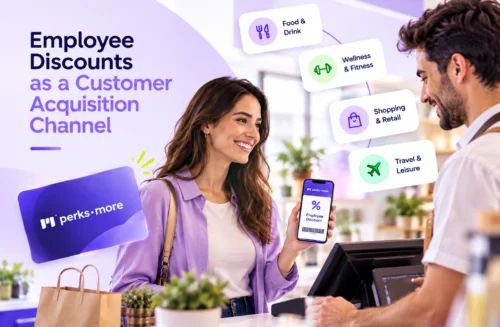
Employees can discover benefits across categories such as:
- Food & Drink
- Wellness & Fitness
- Shopping & Retail
- Travel & Leisure
- Beauty
- Technology
- Entertainment
Participating businesses can provide offers designed specifically for members of the Perks & More network.
The focus is not simply on having a large number of offers.
It is about creating a connected experience where employees can discover useful benefits, understand how they work and redeem them with participating businesses.
The Real Measure of a Benefit Is Whether People Use It
A benefits programme does not become valuable because it contains a long list of offers.
It becomes valuable when employees see something relevant, understand it, use it and feel that it adds something to their everyday lives.
For employers, that means focusing on:
Relevance over quantity.
Simplicity over complexity.
Usage over availability.
Choice over one-size-fits-all benefits.
And most importantly:
Employee value over simply having a benefits list.
Final Thoughts
The best employee benefit may not be the most expensive or impressive one.
It may simply be the benefit that an employee can use today.
A restaurant discount before lunch.
A fitness offer after work.
A shopping benefit at the weekend.
A wellness service when they need it.
These small, practical benefits can make the overall employee experience feel more connected to everyday life.
For employers, the objective should therefore be simple:
Give employees benefits they can understand, access and genuinely use.
That is what turns an employee benefits programme from a list of perks into something people actually value.

 Oct 01, 2026



 Oct 01,2026